
Areas served · Michigan
Forensic Engineering in Ann Arbor
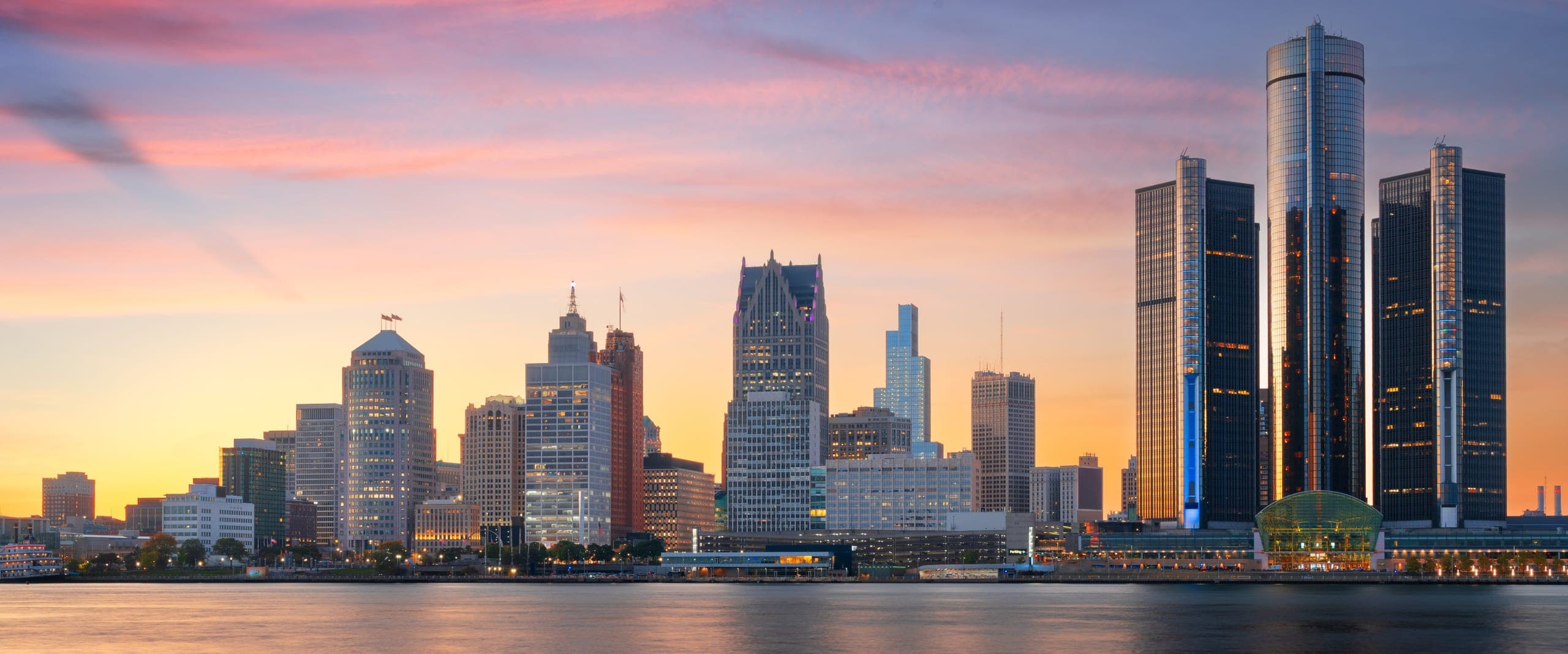
In and around Ann Arbor
What we investigate in Ann Arbor
Two forces drive most structural claims in Ann Arbor: glacial soils that swell and shrink under a long freeze-thaw winter, and Huron River flooding that has grown heavier as rainfall climbs. We document what caused the damage and separate it cleanly, and a licensed engineer responds within 24 hours.
The conditions we see in Ann Arbor
Ann Arbor sits on glacial ground, a mix of clay, loam, sand, dense till, and alluvial deposits that expand and contract with moisture, and its freeze-thaw cycles work on concrete foundations that were not properly engineered. The Huron River runs through the middle of the city and has flooded on a documented record; low neighborhoods along Allen Creek and Malletts Creek have grown more flood-prone as heavy-rain events increase across the watershed.
Winter here is long. Measurable snow covers the ground on more than half of winter days, and the area lies in a heating-dominated climate that drives deep seasonal frost and roof snow load. Washtenaw County also carries a documented tornado history: an EF3 struck nearby Dexter on March 15, 2012, with peak winds estimated near 135 to 140 mph. The housing runs from older converted homes near the University of Michigan campus to newer apartment construction.
How we help in Ann Arbor
The evaluations Ann Arbor cases usually call for
- Foundation, freeze-thaw, and snow-load evaluation
Cracked walls, heaved slabs, and sagging framing here can trace to expansive glacial soil, deep freeze-thaw movement, flood saturation near the Huron River, or overload on an older frame. Our licensed engineers evaluate the structure, the soil behavior, and the frost conditions together and document which one is responsible.
Our structural engineering in Ann Arbor- Flood, storm, and construction-defect investigation
After creek or river flooding, or wind and tornado damage, we determine what the water and wind did to the structure and whether the loss came from the event, a pre-existing condition, or a construction defect. Each conclusion rests on the physical evidence, not assumption.
Our forensic engineering services
Fire origin & cause
Fire origin and cause in Ann Arbor
Much of the housing near the University of Michigan central campus is older converted houses run as student rentals, carrying aging heating and electrical systems, after-the-fact additions, and uneven maintenance. In dense multi-unit and porch-heavy housing, fire moves through attics and shared voids fast, and reading it back to a single point of origin takes real work.
Our NAFI-certified investigators work to NFPA 921: a systematic scene examination, burn patterns traced back to the area of origin, and analysis of the electrical, heating, and mechanical systems, carried to an accidental or incendiary determination. We preserve the evidence before it is lost, document the finding, and provide it at deposition and trial when the loss is disputed.
Fires we investigate
- Residential and commercial fires
- Student-rental and apartment fires
- Heating-system and space-heater fires
- Electrical and appliance fires
- Vehicle fires
Common questions
Forensic engineering in Ann Arbor, Michigan
A different question about your case? A licensed engineer, not a call center, answers within 24 hours.
Is foundation movement in Ann Arbor from soil or from frost?
It can be either, and often both. The area's glacial soils swell and shrink with moisture while deep freeze-thaw lifts and drops footings. We evaluate the movement pattern and the site conditions to determine the cause rather than assume it.
Can you assess flood damage near the Huron River or the creeks?
Yes. Much of the structural evidence remains after Allen Creek, Malletts Creek, or Huron River flooding, and we evaluate the foundation, framing, and finishes to document what the water caused versus what predated it.
Do you charge travel to reach Ann Arbor?
No. We work Ann Arbor-area cases from our Omaha lab and Los Angeles office with no travel charges, and a licensed engineer responds within 24 hours.
Have a loss that needs answers?
Tell us what happened. A licensed engineer, not a call center, will review your case.