
Areas served · South Carolina
Forensic Engineering in Greenville
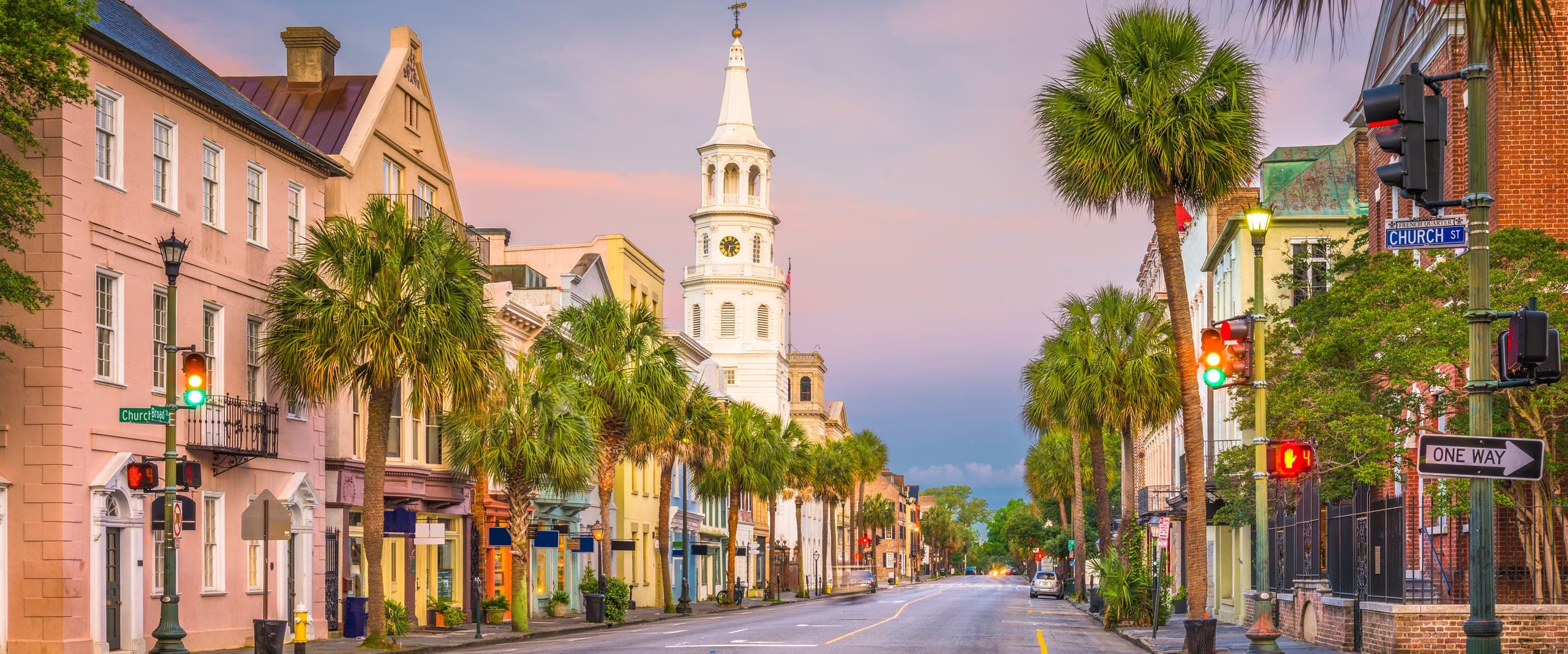
In and around Greenville
What we investigate in Greenville
Greenville's losses split between two inland forces: tropical systems that arrive as wind and rain rather than surge, and the Piedmont's shrink-swell residual clays working under the foundation. We investigate what actually failed and document it to a standard that holds, and a licensed engineer responds within 24 hours.
The conditions we see in Greenville
Greenville sits in the Piedmont at the Blue Ridge foothills, on a nearly continuous mantle of saprolite and residual soil over bedrock. Those residual clays are expansive, shrinking and swelling with moisture, and the saprolite thins or disappears on steep slopes and in valley bottoms, so foundation movement and slope behavior can change sharply within a single lot. When Hurricane Helene reached the Upstate in September 2024 as a tropical remnant, it killed multiple people in Greenville County, brought gusts near 80 mph, knocked out power to hundreds of thousands of Upstate customers, and flooded low ground under heavy rain, proof that inland systems here drive wind and water, not surge.
Since 1950 the area has recorded roughly 90 tornadoes within 25 miles, mostly EF0 to EF1 with a few stronger, so straight-line and tornado wind is a real if generally lower-intensity peril. The housing stock skews modern and suburban, median construction near 1987, but it is layered over a pre-1940s core and a defining textile-mill heritage. Century-old mills such as Mills Mill, Brandon Mill, and Judson have been converted to lofts, mixing heavy timber and load-bearing masonry with contemporary framing.
How we help in Greenville
The evaluations Greenville cases usually call for
- Foundation and slope evaluation
When a slab cracks or a wall separates on a Greenville lot, the question is whether it is shrink-swell movement in the residual clay, a slope or drainage problem where the saprolite thins, or a construction defect. Our licensed engineers evaluate the structure and the ground together and document which one caused the damage.
Our structural engineering services- Storm and water loss investigation
After a tropical remnant or a severe thunderstorm, we determine whether the damage came from wind, wind-driven rain, or a condition that predated the storm, and we investigate the creek and flash flooding that follows heavy rain here. Each conclusion rests on the physical evidence at the property.
Our forensic engineering services
Fire origin & cause
Fire origin and cause in Greenville
Greenville's converted textile mills change how a fire reads. Century-old heavy-timber and masonry mill buildings, retrofitted with modern electrical, HVAC, and residential occupancy, burn and collapse differently than the framing around them, and the pre-1940s and mid-century housing core carries aged wiring and layered additions of its own. Old construction hides its evidence, and settling origin and cause early is what protects the claim or the case.
Our NAFI-certified investigators work to NFPA 921. They examine the scene systematically, trace the burn and char patterns back to the area of origin, evaluate the electrical and mechanical systems, and eliminate causes until the evidence supports one, accidental or incendiary. The investigator preserves that evidence before it is lost, documents the finding, and testifies to it at deposition and trial.
Fires we investigate
- Residential and commercial fires
- Historic mill and loft-conversion fires
- Electrical and appliance fires
- Downtown and mixed-use fires
- Vehicle fires
Common questions
Forensic engineering in Greenville, South Carolina
A different question about your case? An engineer, not a call center, answers within 24 hours.
Is foundation cracking in Greenville from the soil?
Often, but not always. The Piedmont's residual clays shrink and swell, and slope movement is common where the saprolite thins, yet drainage, leaks, and construction defects produce similar cracking. We evaluate the evidence before assigning a cause.
Can you tell storm wind damage from older damage?
Yes. Separating fresh wind and wind-driven-rain damage from pre-existing wear is central to an Upstate storm claim, and it rests on the physical patterns at the property, not assumptions.
Do you charge travel to reach Greenville?
No. We work Greenville-area cases from our Omaha lab and Los Angeles office with no travel charges, and a licensed engineer responds within 24 hours.
Have a loss that needs answers?
Tell us what happened. An engineer, not a call center, will review your case.