
Areas served · Kansas
Forensic Engineering in Salina
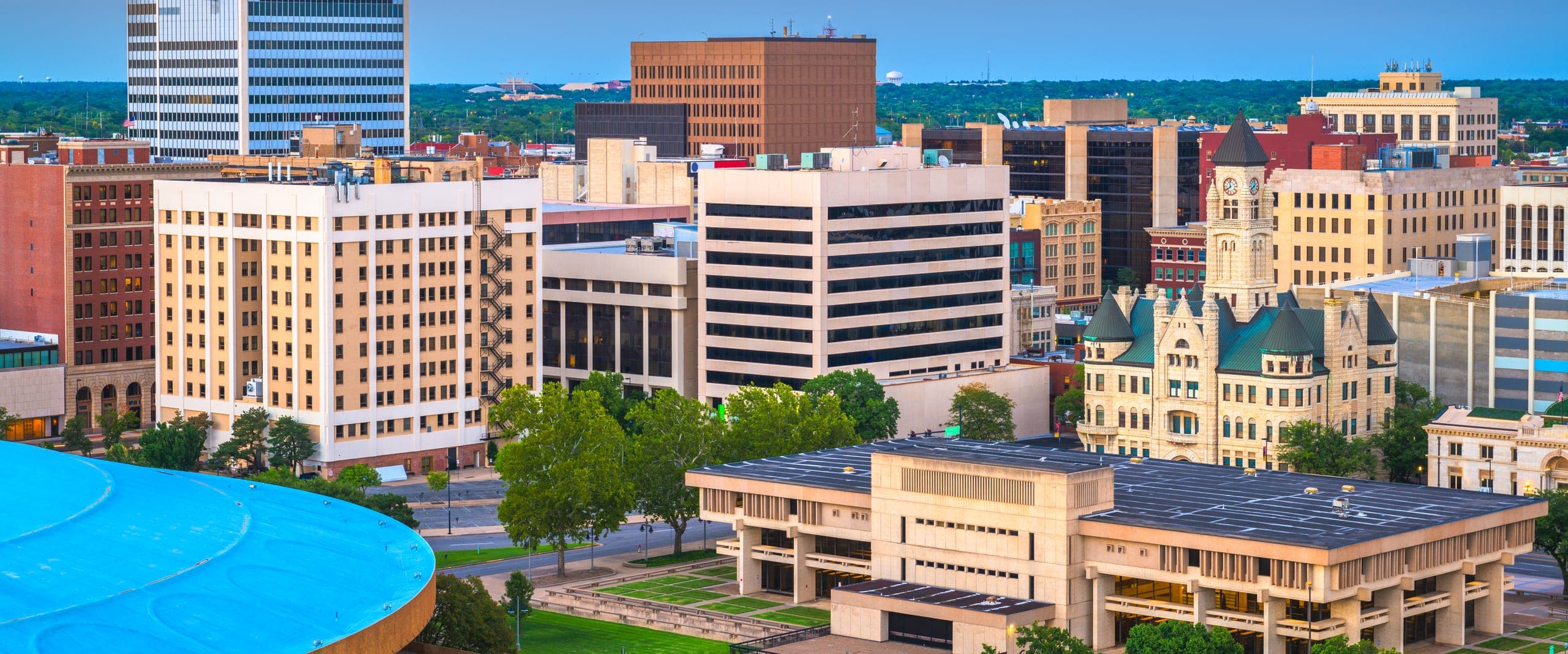
In and around Salina
What we investigate in Salina
Salina sits in central Kansas inside Tornado Alley, and most losses we evaluate here trace to violent weather: tornadoes, very large hail, damaging straight-line thunderstorm winds, and Smoky Hill River flooding. We document what actually failed to a standard that survives cross-examination, and a licensed engineer responds within 24 hours with no travel charges.
The conditions we see in Salina
Central Kansas takes the full range of severe convective weather. Kansas ranks third in the nation for tornado density at about 4.4 tornadoes per 100 square miles, and Saline County keeps adding to the record, including a tornado confirmed near Smolan southwest of Salina on April 1, 2025. The same systems drop very large hail and destructive straight-line winds. A 113 mph gust hit Salina on June 8, 2026, uprooting large trees, downing power lines, and toppling a church steeple, with hail up to 1.50 inches measured just north of town. Salina also sits on the Smoky Hill River, and the 1951 flood of record put the business district under water, which drove the 1961 Army Corps of Engineers project of a diversion channel and several miles of levee that still govern flood exposure here.
Downtown Salina runs on older masonry. After the December 1871 fire tore through the wood-frame business district, the city set fire limits and builders turned to brick and stone, and the district later gained 1930s Art Deco landmarks such as the ten-story United Life Building of 1930, built of Kansas-made brick, and the Fox Watson Theatre of 1931. Much of that downtown fabric is aging unreinforced or lightly reinforced masonry that loads and cracks differently under wind and hail than modern construction. Homes and commercial buildings sit largely in the flat Smoky Hill River valley, where the Kansas Geological Survey maps wide stream valleys filled with clay, silt, sand, and gravel over Dakota and Kiowa sandstone bedrock. Clay-rich valley alluvium swells and shrinks with moisture under slab and framed foundations, and a hard-freeze climate adds real freeze-thaw cycling on top.
How we help in Salina
The evaluations Salina cases usually call for
- Wind, hail, and foundation evaluation
When a roof tears off, a masonry wall cracks, or a slab moves in Salina, the cause can be tornado or straight-line wind, hail impact, clay-rich valley soil shrinking and swelling, freeze-thaw, or a construction defect. Our licensed engineers evaluate the structure and the way the ground and the storm loads behaved together, then document which one is responsible.
Our structural engineering services- Storm and flood loss investigation
After a severe storm or Smoky Hill River flooding, we separate tornado wind, straight-line wind, hail, and floodwater from a condition that predated the event. That distinction decides the claim, so we anchor it to the physical evidence at the property rather than to assumption, in a form that survives a disputed loss.
Our forensic engineering services
Fire origin & cause
Fire origin and cause in Salina
Salina's fire history runs through its brick. The December 1871 fire is what pushed the business district to masonry and prompted the city's first fire-limit ordinance, and that older brick core, along with the town's older housing, still carries aging heating and electrical systems that work hard through a long, cold central-Kansas heating season. Older masonry burns and collapses on its own terms, and the origin evidence inside it can vanish quickly. As a regional plains hub, Salina also holds industrial, agricultural, and heavy-commercial sites where a fire or explosion raises questions a walkthrough cannot answer.
We build every determination under NFPA 921, and our investigators are NAFI-certified. The work starts with a systematic examination of the scene and a reading of the burn and char patterns back to the area of origin, then moves to the electrical and mechanical systems, testing each candidate ignition source against the physical evidence until one holds, accidental or incendiary. We secure that evidence before overhaul and weather degrade it, set the finding down in a written report, and defend it under deposition and trial testimony.
Fires we investigate
- Residential and commercial fires
- Older masonry and downtown-building fires
- Heating-system and electrical fires
- Vehicle fires
- Industrial and agricultural fires and explosions
Common questions
Forensic engineering in Salina, Kansas
A different question about your case? An engineer, not a call center, answers within 24 hours.
Can you tell tornado or straight-line wind damage from hail or pre-existing damage?
Yes. Tornado wind, straight-line thunderstorm wind, and hail each load and mark a structure differently, and separating them from prior wear or a defect is the core of a Salina storm claim. A 113 mph straight-line gust hit the city on June 8, 2026, and we base the conclusion on the physical evidence at the property.
Is foundation movement in Salina from the soil or from something else?
It can be either. Much of the city sits in the Smoky Hill River valley on clay, silt, sand, and gravel, and the clay-rich fill swells and shrinks with moisture while deep freeze-thaw adds to it, but drainage, plumbing leaks, and construction defects produce similar cracking. We evaluate the pattern and the ground before assigning a cause.
Do you charge travel to reach Salina?
No. We work Salina-area cases from our Omaha lab and Los Angeles office with no travel charges, and a licensed engineer responds within 24 hours.
Have a loss that needs answers?
Tell us what happened. An engineer, not a call center, will review your case.