
Areas served · Maryland
Forensic Engineering in Baltimore
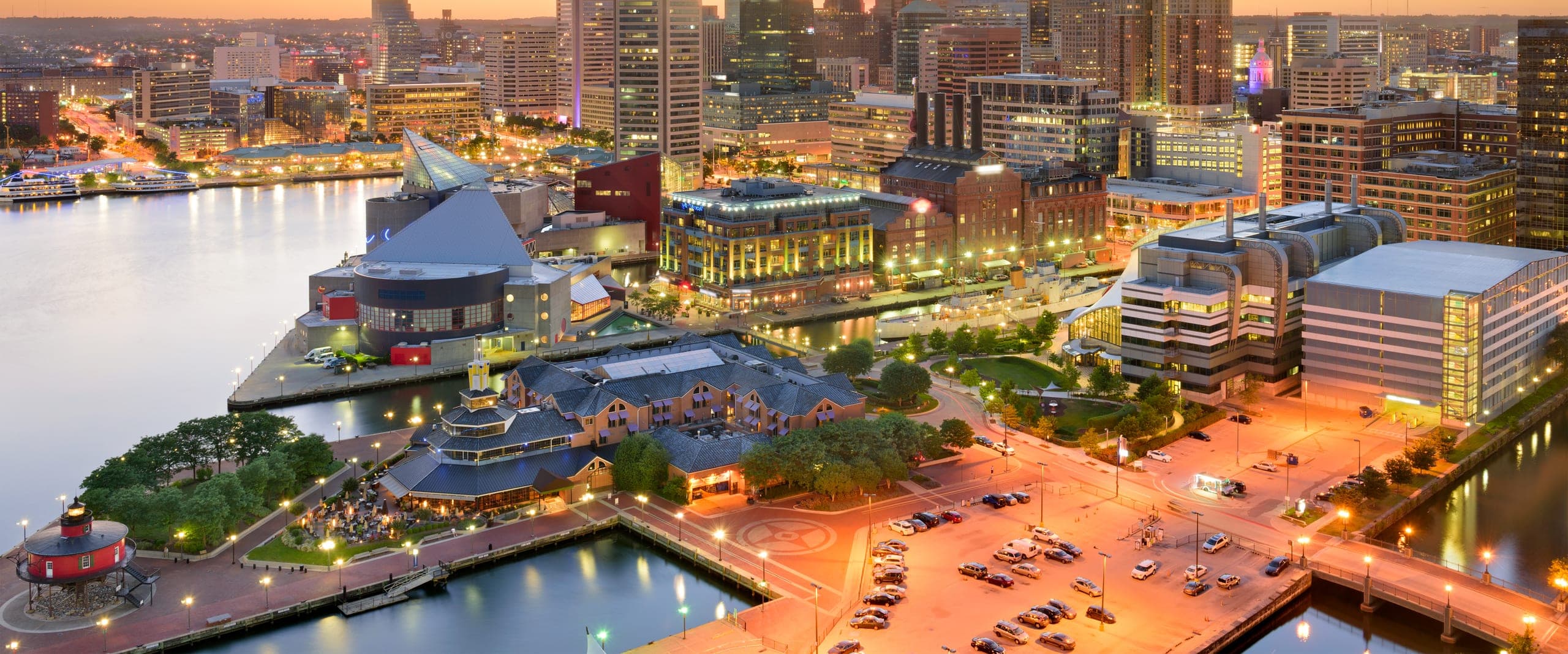
In and around Baltimore
What we investigate in Baltimore
Baltimore's structural losses trace mostly to its attached brick rowhouses and the ground they sit on: freeze-thaw at the masonry, tropical rain and tidal harbor flooding, and party walls that carry damage house to house. We document what actually failed, and a licensed engineer responds within 24 hours with no travel charges.
The conditions we see in Baltimore
Baltimore sits at the Atlantic fall line, where the crystalline Piedmont dips beneath the Coastal Plain and a wedge of unconsolidated sediments including marine clay carries load under buildings. The city is IECC Climate Zone 4A, mixed-humid, so freeze-thaw cycling works on masonry and foundations year after year. Tropical storms and hurricane remnants reach the harbor as well. In September 2003, Isabel drove a storm surge above seven feet into the Inner Harbor, the worst Chesapeake Bay flooding in more than seventy years, and residents canoed down flooded streets in Fells Point and Canton.
The defining stock is the attached brick rowhouse. Construction dates to the 1820s, most of it predates 1978, and party-wall construction lets fire and water move between adjoining houses. Many carry Formstone, a faux-stone facade patented in Baltimore in 1937 whose metal lath pulls away from the brick and traps moisture behind it, hiding deterioration. Tidal flooding recurs along the harbor at Fells Point and Canton, and the city still holds thousands of vacant rowhouses that deteriorate and collapse.
How we help in Baltimore
The evaluations Baltimore cases usually call for
- Rowhouse, masonry, and foundation evaluation
When brick spalls, a party wall cracks, or a foundation moves, the cause can be freeze-thaw on aging masonry, moisture trapped behind Formstone, settlement on Coastal Plain sediments, or a construction defect. Our licensed engineers evaluate the structure and the ground together and document which one is responsible.
Our structural engineering services- Flood and water loss investigation
After tropical rain, flash flooding, or a tidal event at the harbor, we determine what the water did to a structure and whether the damage traces to the flood, to moisture behind the facade, or to a condition that predated the storm. Each conclusion rests on the physical evidence.
Our forensic engineering services
Fire origin & cause
Fire origin and cause in Baltimore
On January 24, 2022, a fire in a vacant three-story rowhouse on the 200 block of S. Stricker Street collapsed and killed three firefighters. That loss captures the city's central fire problem: thousands of vacant rowhouses, aging and often unsprinklered, that burn and collapse without warning, while party walls carry fire into occupied houses next door. When a fire moves through attached construction like that, reading where it began is what the claim or the case turns on.
Our NAFI-certified investigators work these scenes to NFPA 921. They examine the scene systematically, trace the burn and char patterns back to the area of origin, evaluate the electrical and mechanical systems, and rule out causes until the evidence supports one conclusion, accidental or incendiary. Reaching the scene early preserves evidence that collapse and overhaul destroy, and the same investigator documents the finding and testifies to it at deposition and trial.
Fires we investigate
- Residential and commercial fires
- Vacant and abandoned-rowhouse fires
- Party-wall fire spread in attached construction
- Electrical and appliance fires
- Vehicle fires
Common questions
Forensic engineering in Baltimore, Maryland
A different question about your case? An engineer, not a call center, answers within 24 hours.
Is cracking in a Baltimore rowhouse the masonry or the soil?
It can be either. Freeze-thaw and moisture trapped behind Formstone deteriorate old brick, and Coastal Plain sediments settle under load, and both crack walls and foundations. We evaluate the structure and the ground together before assigning a cause.
Can you investigate a vacant-property or party-wall fire?
Yes. Vacant rowhouses and attached party-wall construction are a defining Baltimore fire hazard, and separating an incendiary cause from an accidental one, and tracing how fire spread between houses, is a core part of every origin-and-cause investigation here.
Do you charge travel to reach Baltimore?
No. We work Baltimore-area cases from our Omaha lab and Los Angeles office with no travel charges, and a licensed engineer responds within 24 hours.
Have a loss that needs answers?
Tell us what happened. An engineer, not a call center, will review your case.