
Areas served · Idaho
Forensic Engineering in Idaho Falls
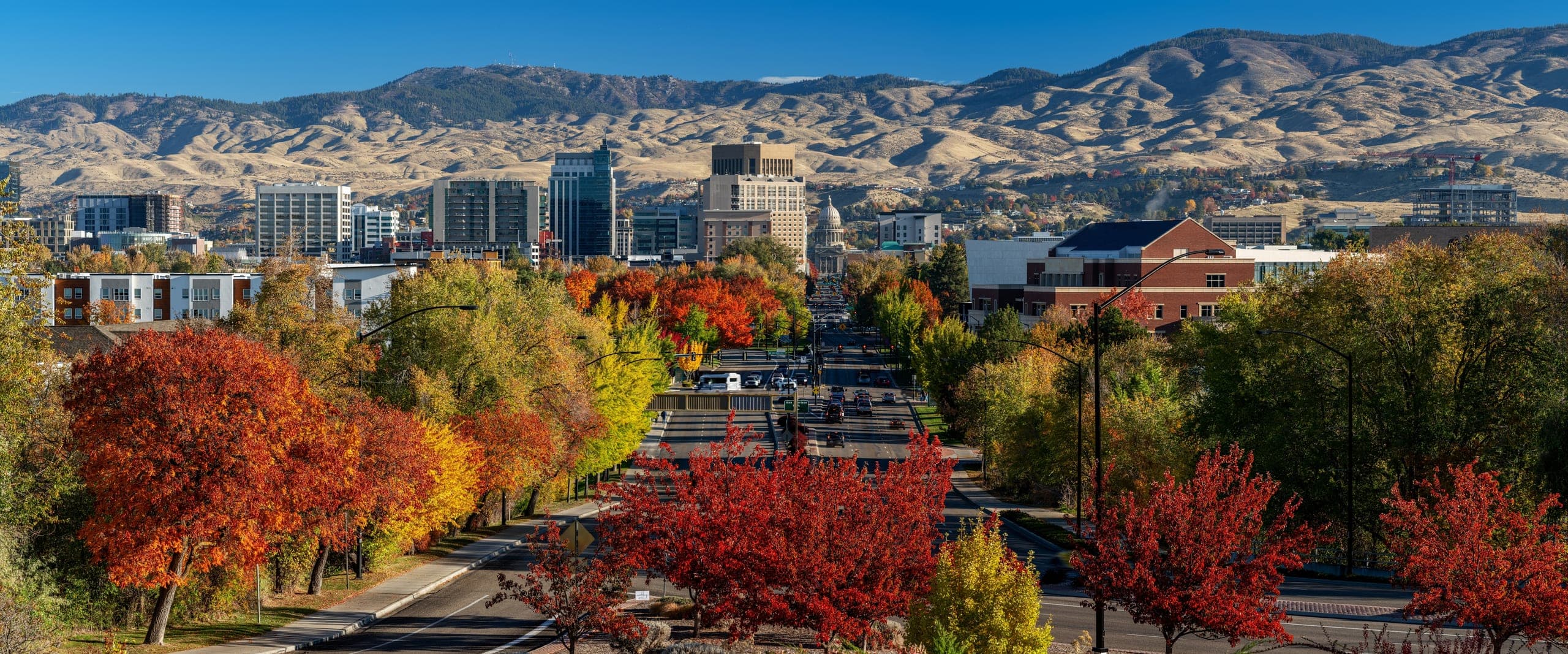
In and around Idaho Falls
What we investigate in Idaho Falls
Idaho Falls carries an uncommon mix for the Intermountain West: earthquake hazard from Basin and Range faulting, deep frost and heavy snow load through a long cold winter, and a growing wildland-urban interface across East Idaho. We document what actually failed to a standard that holds, and a licensed engineer responds within 24 hours with no travel charges.
The conditions we see in Idaho Falls
The city sits on the eastern Snake River Plain, a graben underlain by layered volcanic basalt. Near Idaho Falls a basalt flow roughly 557,000 years old lies beneath more than 20 meters of loess, the windblown silt that covers much of the ground here, and the basalt itself is interbedded with sand, silt, and clay lenses. That layered profile behaves differently under a footing than uniform soil. The seismic hazard on top of it is real: eastern and central Idaho carry Basin and Range normal faulting, the Idaho Geological Survey ranks the state fifth in the nation for earthquake risk, and the 1983 Borah Peak M6.9 event ruptured the Lost River fault with a visible surface scarp. The 2020 Stanley M6.5 quake was the second largest ever recorded in Idaho.
Winters are cold and snowy. Idaho Falls averages about 39 inches of snow a year against a national figure near 28, temperatures drop into the teens and single digits, and the frost-free season runs on the order of 125 days, so snow load, deep frost, and hard freeze all bear on a structure here. The Snake River runs through town on a monitored NOAA gauge, and inland riverine flooding is a recognized Idaho hazard, though FEMA's National Risk Index puts the city's own flood-risk score relatively low. The housing is dominated by single-family detached homes, roughly two-thirds of units, about 64 percent per Census QuickFacts, predominantly wood frame, spread across mid-to-late 20th century and newer subdivision growth, with Idaho National Laboratory and related energy facilities adding industrial building types nearby.
How we help in Idaho Falls
The evaluations Idaho Falls cases usually call for
- Foundation, frost, and snow-load evaluation
Cracked walls, a heaved slab, or a sagging roof in this climate can trace to deep frost, roof snow load, movement in the loess-over-basalt profile, or a construction defect. Our licensed engineers evaluate the structure and the way the ground and the load behaved together, then document which cause is responsible.
Our structural engineering services- Seismic and water loss investigation
When ground motion, Snake River flooding, or a plumbing failure damages a structure, we determine whether the cause is seismic movement, water, or a condition that predated the event. We also investigate the component and construction failures that surface afterward, grounding each finding in the physical evidence.
Our forensic engineering services
Fire origin & cause
Fire origin and cause in Idaho Falls
The country around Idaho Falls is sagebrush steppe and dry grass and brush, and that sets the local fire hook. In the foothills southeast of the city and out across the rangeland, wind-driven fires start fast from human ignition, equipment, and holiday fireworks and reach homes at the wildland-urban interface, which keeps expanding as development pushes into the fuels. Inside town the long heating season adds furnace, wood-stove, and electrical fires in older wood-frame housing. Sorting a rangeland ignition that reached a structure from an interior failure, and reaching the scene before the evidence is gone, is what a disputed loss turns on.
Our NAFI-certified investigators determine origin and cause under NFPA 921. They work the scene methodically, trace the burn and char patterns back to the area of origin, and evaluate the heating, electrical, and mechanical systems, testing and ruling out each candidate cause until the evidence supports one, accidental or incendiary. We secure the evidence before weather or overhaul degrades it, record the finding in a written report, and stand behind it at deposition and trial.
Fires we investigate
- Residential and commercial fires
- Rangeland and wildland-urban interface fires
- Heating-system and wood-stove fires
- Electrical and appliance fires
- Industrial and energy-sector fires and explosions
Common questions
Forensic engineering in Idaho Falls, Idaho
A different question about your case? An engineer, not a call center, answers within 24 hours.
Is foundation movement in Idaho Falls from frost or from the soil?
It can be either. Deep frost lifts and drops footings through a long winter, and the loess over basalt with its sand, silt, and clay lenses moves under load as well. We evaluate the damage pattern and the ground conditions together to determine the cause rather than assume it.
Do you evaluate earthquake damage in eastern Idaho?
Yes. Idaho ranks fifth in the nation for earthquake risk, and Basin and Range faulting produced the 1983 Borah Peak and 2020 Stanley events. Seismic movement loads a structure differently than settlement, so we assess the crack pattern, the framing, and the site before assigning a cause.
Do you charge travel to reach Idaho Falls?
No. We work Idaho Falls-area cases from our Omaha lab and Los Angeles office with no travel charges, and a licensed engineer responds within 24 hours.
Have a loss that needs answers?
Tell us what happened. An engineer, not a call center, will review your case.