
Areas served · Idaho
Forensic Engineering in Twin Falls
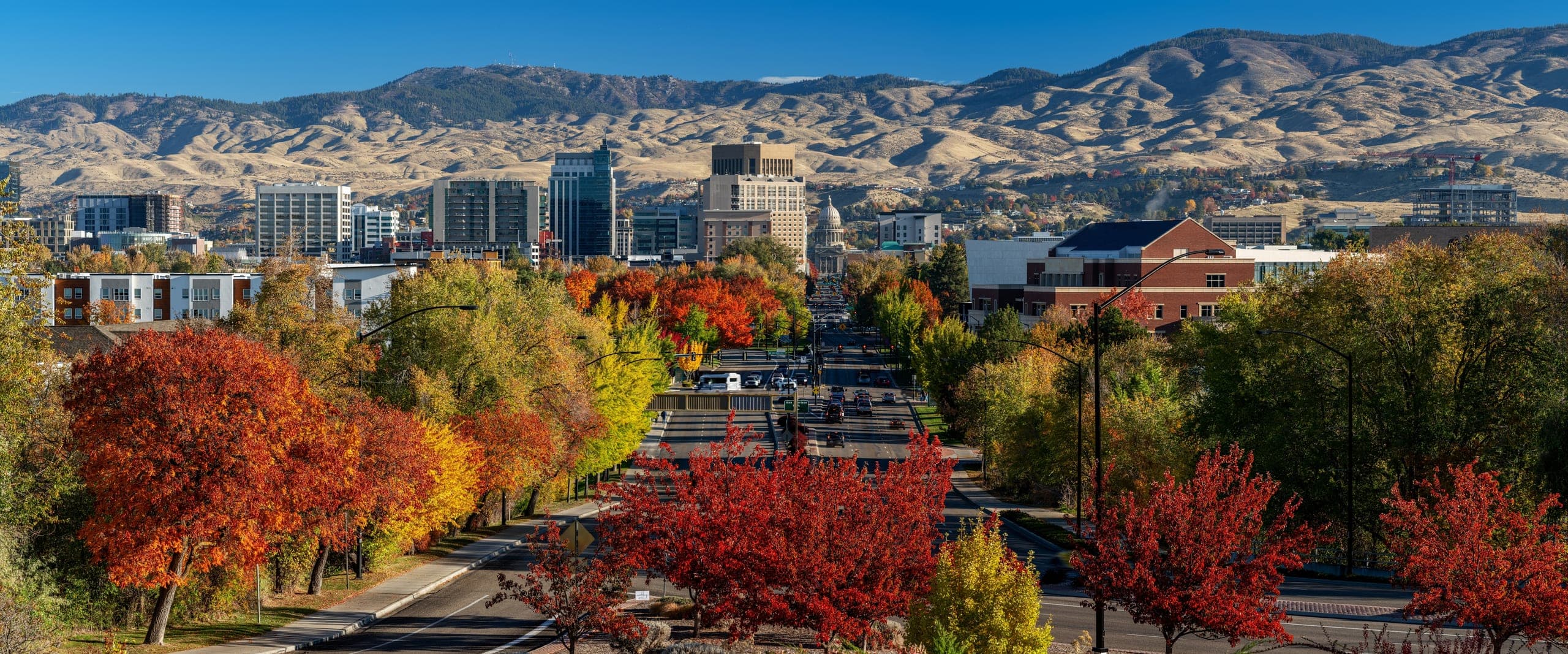
In and around Twin Falls
What we investigate in Twin Falls
Rangeland wildfire off the Snake River Plain is the peril that defines Twin Falls, ahead of hard winter freeze and the way footings behave on basaltic volcanic ground rather than deep sedimentary clay. We document what actually failed to a standard that holds, a licensed engineer responds within 24 hours, and there are no travel charges.
The conditions we see in Twin Falls
The city sits in the Magic Valley on the eastern Snake River Plain, a volcanic depression along the Yellowstone hotspot track, its ground basaltic lava over older silicic volcanics with the Snake River Canyon cut straight into that basalt. This is high-desert volcanic terrain, not deep soil, so a footing bears on a stiffer and more variable profile than most valley cities. Wildfire is the leading natural peril on this plain. Invasive cheatgrass and other annual grasses cure early and carry fast-moving rangeland fire, mega-fires of 100,000 acres and larger have grown common across the Snake River Plain and Northern Great Basin, and the wildland-urban interface around the city is exposed. Idaho also carries seismic hazard from Basin and Range extension, and the Idaho Geological Survey ranks the state fifth in the nation for earthquake risk, though the largest active faults sit in central Idaho well north of Twin Falls.
The climate is cold semi-arid with a hard winter freeze: December mean lows near 23 degrees and roughly 18 inches of snow a year, so freeze-thaw and deep frost drive foundation movement while roof snow load stays light against the mountains. High water runs mainly with spring snowmelt in April and May, and a fresh burn scar sheds runoff fast where fire has stripped the vegetation off the slopes above the canyon. The housing stock runs to about 21,838 units with a median build year near 1982, predominantly wood-frame single-family, over an older core of pre-1940 masonry that makes up roughly a tenth of the stock. Because the Magic Valley is one of the country's densest food-processing regions, the metro also carries extensive dairy, packing, and cold-storage plants, along with metal agricultural and warehouse buildings, many of the refrigerated sites running ammonia systems.
How we help in Twin Falls
The evaluations Twin Falls cases usually call for
- Foundation, freeze, and structural evaluation
A cracked slab, a heaved footing, or a separated wall here can trace to freeze-thaw and deep frost through a hard winter, to movement in the basaltic volcanic profile, or to a construction defect. Our licensed engineers evaluate the structure alongside the way the ground and the cold behaved, then identify which cause carries the damage.
Our structural engineering services- Wildfire and water loss investigation
After a rangeland fire reaches the built-up edge, a spring-snowmelt flood, or post-fire runoff off a burned slope, we determine whether the loss came from that event or from a condition already present. We also work the component and construction failures that surface in the aftermath, tying each conclusion to the physical evidence.
Our forensic engineering services
Fire origin & cause
Fire origin and cause in Twin Falls
Fire on the Snake River Plain starts in the grass. Cheatgrass and other invasive annuals cure early and carry fire fast across open rangeland, and when it reaches structures at the built-up edge the origin question sits well out in the fuels. The Magic Valley layers on an exposure few cities face: the dairy, packing, cold-storage, and ammonia-refrigeration plants that anchor the food-processing economy carry industrial fire and explosion risk of their own. Separating a wildland ignition, an ember exposure, an interior heating or electrical fault, and an industrial-process fire is where the determination begins, and reaching the scene before the evidence is gone is what settles the loss.
Every finding our NAFI-certified investigators reach is built on NFPA 921. We walk the scene in sequence, follow the burn and char patterns inward until they converge on the area of origin, and put the electrical, heating, and mechanical systems to the test against that origin, eliminating each candidate cause until one survives the evidence, accidental or incendiary. The evidence is secured before weather or overhaul can degrade it, the conclusion goes into a written report, and the same investigator defends it at deposition and trial.
Fires we investigate
- Residential and commercial fires
- Rangeland and wildland-urban interface fires
- Dairy, food-processing, and cold-storage fires and explosions
- Heating-system and electrical fires in aging wiring
- Vehicle fires along the I-84 and US-93 corridors
Common questions
Forensic engineering in Twin Falls, Idaho
A different question about your case? An engineer, not a call center, answers within 24 hours.
Is foundation movement in Twin Falls from frost or from the soil?
It can be either. Deep frost and freeze-thaw lift and drop footings through a hard high-desert winter, and the basaltic volcanic profile behaves differently under load than deep sedimentary soil. We read the damage pattern and the ground conditions together to determine the cause rather than assume it.
Can you investigate a rangeland fire that reached a structure?
Yes. Cheatgrass-driven fire moves fast across the Snake River Plain and reaches homes and outbuildings at the wildland-urban interface, and separating a wildland ignition or ember exposure from an interior cause is a core part of an origin-and-cause investigation here, based on the physical evidence at the scene.
Do you charge travel to reach Twin Falls?
No. We work Twin Falls-area cases from our Omaha lab and Los Angeles office with no travel charges, and a licensed engineer responds within 24 hours.
Have a loss that needs answers?
Tell us what happened. An engineer, not a call center, will review your case.