
Areas served · North Carolina
Forensic Engineering in Chapel Hill
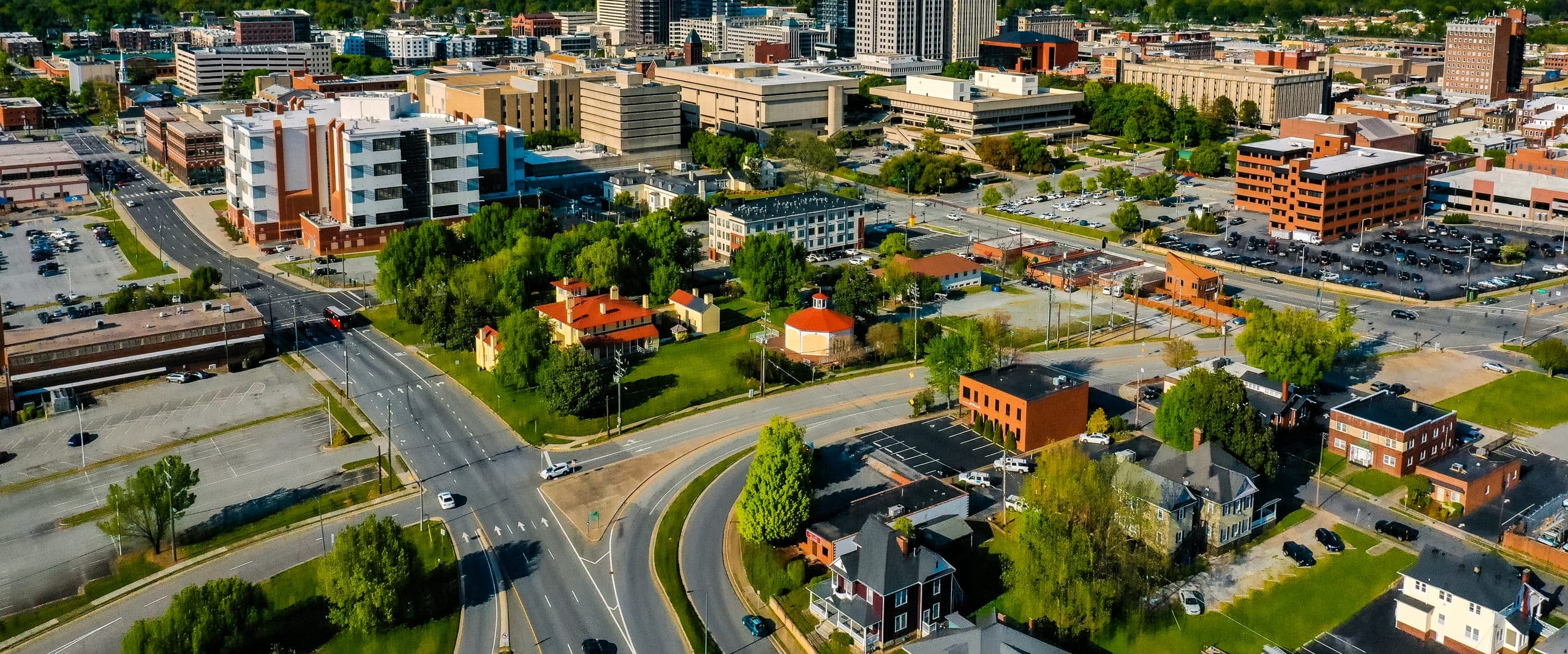
In and around Chapel Hill
What we investigate in Chapel Hill
Chapel Hill's structural losses turn mostly on water and clay: flash flooding along Booker Creek, inland winds and rain from tropical remnants that reach the central Piedmont, and thin shrink-swell residual soils under the foundations. We investigate what actually failed and document it to a standard that holds, and a licensed engineer responds within 24 hours.
The conditions we see in Chapel Hill
Flash flooding is the defining local hazard. On July 6, 2025, Tropical Storm Chantal dropped roughly 6 to 9 inches of rain in a few hours, overflowing Booker Creek and causing more than 11 million dollars in damage at Eastgate Crossing; the National Weather Service rated it a 500 to 1,000 year rainfall. Tropical remnants also carry damaging inland wind here, as Hurricane Fran did in 1996 when Category 3 winds pushed into the central Piedmont and toppled large oaks.
Beneath the buildings sit thin, clay-rich Piedmont residual soils, mainly the Cecil and Orange series, with dense clay B horizons over weathered igneous and metamorphic rock and low infiltration rates. The North Carolina Geological Survey documents expansive shrink-swell clays that change volume with moisture across the Carolina terrane and the Triassic basins nearby. The building stock ranges from nineteenth and early twentieth century wood-frame and masonry homes in the Franklin-Rosemary and Cameron-McCauley historic districts to dense off-campus student rentals and post-war subdivisions.
How we help in Chapel Hill
The evaluations Chapel Hill cases usually call for
- Foundation, clay, and water-damage evaluation
When a slab cracks or a wall separates in Chapel Hill, the cause can be shrink-swell clay, poor drainage over low-infiltration soil, creek flooding, or a construction defect. Our licensed engineers evaluate the structure and the soil behavior together and document which one is responsible.
Our structural engineering services- Flood and storm loss investigation
After a Booker Creek flood or a tropical-remnant windstorm, we determine whether the damage came from floodwater, wind-driven rain, or a condition that predated the event. That distinction decides the claim, so we ground it in the physical evidence at the property rather than assumption.
Our forensic engineering services
Fire origin & cause
Fire origin and cause in Chapel Hill
Fire loss here concentrates in dense off-campus student rental housing: duplexes, converted single-family homes, and older apartments carrying legacy wiring and heavy cooking and heating loads, along with historic-district homes whose electrical and heating systems date back decades. When a fire starts in an aging or overloaded system inside a rental packed with tenants, getting the origin right drives both the claim and the liability question.
Our NAFI-certified investigators build every determination on NFPA 921. They examine the scene systematically, trace the burn and char patterns back to the area of origin, evaluate the electrical and mechanical systems, and work through the ignition sources until the physical evidence supports one conclusion, accidental or incendiary. The same investigator preserves the evidence early, issues written findings, and testifies at deposition and trial.
Fires we investigate
- Residential and commercial fires
- Student-rental and multifamily fires
- Historic and older-building fires
- Electrical and appliance fires
- Heating-system fires
Common questions
Forensic engineering in Chapel Hill, North Carolina
A different question about your case? An engineer, not a call center, answers within 24 hours.
Is foundation cracking in Chapel Hill a soil problem or a structural one?
It can be either. The Piedmont's thin, clay-rich Cecil and Orange soils shrink and swell with moisture and drain poorly, opening cracks, but plumbing leaks, drainage, and construction defects produce similar patterns. We evaluate the evidence before assigning a cause.
Can you tell Booker Creek flood damage from an older problem?
Yes. Separating fresh floodwater and wind-driven rain damage from pre-existing deterioration or a defect is a core part of a flood loss investigation here, and it is usually the point the claim turns on.
Do you charge travel to reach Chapel Hill?
No. We work Chapel Hill-area cases from our Omaha lab and Los Angeles office with no travel charges, and a licensed engineer responds within 24 hours.
Have a loss that needs answers?
Tell us what happened. An engineer, not a call center, will review your case.