
Areas served · North Carolina
Forensic Engineering in Greensboro
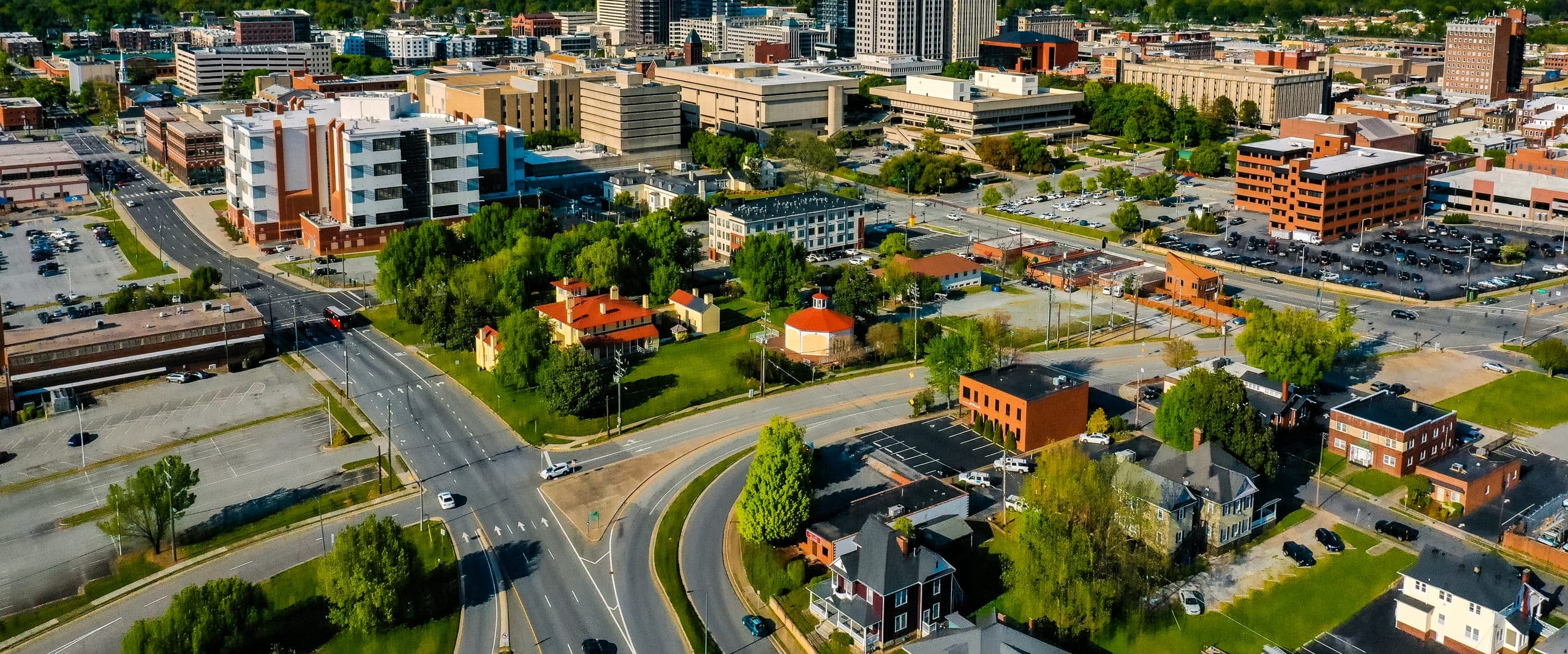
In and around Greensboro
What we investigate in Greensboro
Greensboro's structural losses tend to start in the ground and in the old mill-era brick. The Piedmont's shrink-swell clay moves foundations, and inland-reaching hurricanes and the occasional tornado test aging walls. We document what actually failed, and a licensed engineer responds within 24 hours with no travel charges.
The conditions we see in Greensboro
Greensboro sits on Piedmont clay that swells when wet and shrinks in a dry spell, and the North Carolina Geological Survey maps these shrink-swell soils as a routine hazard across the region. That seasonal movement lifts and drops footings, opening stair-step cracks in brick and drywall that are easy to write off as cosmetic. Weather compounds it: Hurricane Fran reached as far west as Guilford County in 1996 with damaging inland winds, and an April 15, 2018 tornado tracked through east Greensboro at up to 135 mph, so wind and wind-driven rain are real drivers here, not just coastal problems.
The building stock runs from early-1900s brick, including the Cone Mills textile complexes such as the world's largest denim mill at White Oak and the National Register listed Revolution Cotton Mills, through mid-century masonry and wood-frame housing to newer subdivisions clad in vinyl and fiber-cement siding. Many of the old mills are now converted to mixed-use lofts, where original slow-burn masonry meets new systems, and telling clay movement, storm damage, and long-term deterioration apart is the engineering question behind most claims.
How we help in Greensboro
The evaluations Greensboro cases usually call for
- Foundation, soil, and structural evaluation
When a brick wall cracks in a stair-step pattern or a slab moves, the cause may be shrink-swell clay, poor drainage, storm loading, or a construction defect. Our licensed engineers evaluate the structure and the soil behavior together and document which one is responsible, to a standard that holds up in a claim or in court.
Our structural engineering services- Storm and construction-defect investigation
After an inland hurricane, a tornado, or a hard winter storm, we separate wind and wind-driven rain from pre-existing conditions, and we investigate the component and workmanship failures that surface in older mill conversions and fast-built subdivisions alike. Each conclusion rests on the physical evidence at the property.
Our forensic engineering services
Fire origin & cause
Fire origin and cause in Greensboro
The Cone Mills-era buildings now reborn as lofts are Greensboro's hardest fire cases: century-old slow-burn timber and masonry threaded with new electrical, mechanical, and sprinkler systems, sitting alongside older brick housing that carries aging wiring and layers of additions. When a fire starts where old and new construction meet, the cause is seldom obvious in the debris, and heavy mill timber chars and collapses on a different clock than modern light framing.
Our NAFI-certified investigators work the scene to NFPA 921. They examine it methodically, trace the burn and char patterns back to the area of origin, evaluate the electrical and mechanical systems, and rule out causes until the evidence supports one conclusion, accidental or incendiary. Reaching the scene early preserves evidence that overhaul and weather destroy, and the same investigator documents the finding and testifies to it at deposition and trial.
Fires we investigate
- Residential and commercial fires
- Mill-loft and adaptive-reuse building fires
- Heating-system and electrical fires
- Vehicle fires
- Industrial and warehouse fires and explosions
Common questions
Forensic engineering in Greensboro, North Carolina
A different question about your case? An engineer, not a call center, answers within 24 hours.
Is stair-step cracking in Greensboro brick a soil problem?
Often, but not always. The Piedmont's shrink-swell clay moves foundations enough to open stair-step cracks in brick and masonry, yet drainage, storm loading, and construction defects produce similar patterns. We evaluate the evidence before assigning a cause.
Can you tell inland hurricane or tornado damage from older damage?
Yes. Separating fresh wind and wind-driven-rain damage from pre-existing wear or a defect is a core part of a storm loss investigation here, and it is usually the point the claim turns on.
Do you charge travel to reach Greensboro?
No. We work Greensboro-area cases from our Omaha lab and Los Angeles office with no travel charges, and a licensed engineer responds within 24 hours.
Have a loss that needs answers?
Tell us what happened. An engineer, not a call center, will review your case.